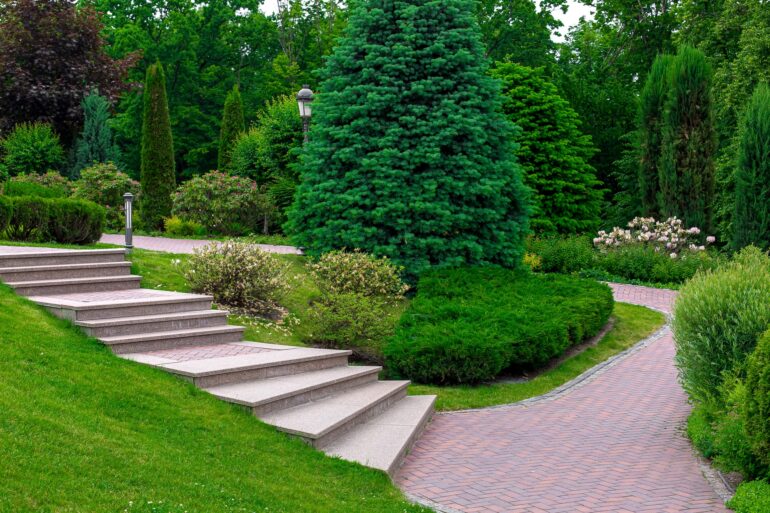
A beautifully landscaped yard does more than just boost your home’s curb appeal; it can also significantly reduce your energy consumption. By strategically placing trees, shrubs, and other plants, you can naturally cool your home in the summer and warm it in the winter. This guide offers strategic landscaping tips to help you cultivate a more energy-efficient home and enjoy lower utility bills.
1. Plant Deciduous Trees on the South Side
Planting deciduous trees on the south and west sides of your home is one of the most effective ways to manage solar heat. During the hot summer months, their broad leaves provide dense shade, blocking the sun’s intense rays from hitting your windows and walls. This natural cooling effect can lower your home’s indoor temperature, reducing strain on your air conditioning system. In the winter, these trees shed their leaves, allowing sunlight to stream in and passively warm your home.
2. Use Evergreen Trees as a Windbreak
Cold winter winds are a major contributor to high energy bills, forcing your heating system to work harder to maintain a comfortable temperature. You can create a natural windbreak by planting a row of dense evergreen trees, like spruces or pines, on the north and northwest sides of your property. This living wall can block harsh winds, reducing heat loss from your home and lowering heating costs.
3. Shade Your Air Conditioner
Your air conditioning unit operates more efficiently in a cooler environment. By planting shrubs or a small tree nearby, you can shade the unit from direct sunlight. This simple step helps the AC run more effectively, as it doesn’t have to work as hard to cool the air. Just make sure to leave enough space around the unit for proper airflow to prevent overheating.
4. Create a Green Roof or Wall
For a more ambitious project, consider installing a green roof or a living wall. A layer of vegetation on your roof provides excellent insulation, keeping your home cooler in the summer and warmer in the winter. Similarly, covering a wall with climbing vines like ivy can shield it from direct sun, reducing heat absorption. These features not only lower energy costs but also add a unique, modern aesthetic to your home.
5. Use Light-Colored Ground Cover
The surfaces around your home can absorb and radiate a surprising amount of heat. Dark-colored materials like asphalt or dark mulch get very hot in the sun, raising the ambient temperature around your house. Opt for light-colored ground covers like stone, gravel, or light-colored mulch instead. These materials reflect sunlight rather than absorbing it, which helps keep the ground and your home cooler.
By implementing these landscaping strategies, you can create a more comfortable and sustainable living environment. Start planning your green-friendly yard today and watch your energy savings grow.