Summer can put a baseball field through a lot. Heat, sun, heavy foot traffic, sudden storms, and packed game schedules can all wear down turf, dirt, and equipment quickly. A field that looks great in May can start showing stress by July if crews don’t stay ahead of daily maintenance.
Good summer baseball field maintenance starts with consistency. Small tasks, handled often, keep the field safer, cleaner, and more playable through the hottest part of the season.
Watch the Turf
Grass needs close attention in summer because heat and dry conditions can weaken roots. Walk the field regularly and look for thinning areas, brown patches, compacted soil, or spots where players cut hard during games. High-traffic zones near bases, dugouts, warm-up areas, and outfield positions usually show stress first.
Water deeply rather than lightly spraying the surface. Deep watering promotes stronger roots and helps the turf withstand hot afternoons. Mow at the appropriate height for your grass type, and avoid cutting too short during extreme heat. Short grass may look clean, but it can burn more quickly and recover more slowly.
Care for the Infield
The infield needs steady attention because summer heat can dry dirt quickly. Dry infield mix can turn dusty, uneven, and loose under players’ feet. Too much water can create slick spots or soft areas that affect footing.
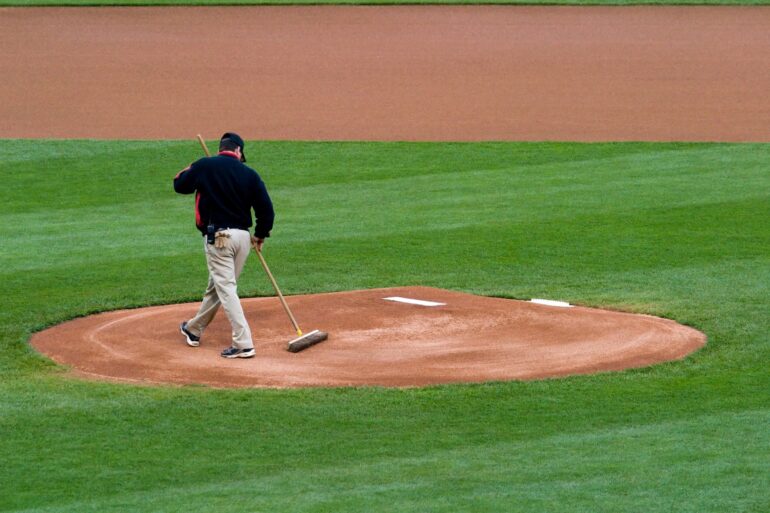
Drag the infield after use to smooth cleat marks, low spots, and loose material. Add water in controlled amounts, then give the surface time to absorb it. Pay close attention to the areas around bases, the mound, and home plate because those spots take the hardest impact during practices and games.
Protect the Field From Sun
Summer sunlight can damage equipment, covers, and exposed surfaces. UV-resistant tarps are ideal for outdoor fields because they protect key areas from harsh sun and sudden rain. Cover the mound, home plate, and other vulnerable spots when the field is unused between games.
Store tarps properly after each use. Fold or roll them cleanly, keep them off sharp surfaces, and check for tears before storms arrive. A damaged tarp can let water through right where the field needs the most protection.
Manage Drainage
A quick summer storm can interrupt a game schedule and leave crews scrambling. Keep drains, edges, and low spots clear so water can move off the field. Remove grass clippings, leaves, and loose debris from problem areas before rain hits.
After storms, inspect puddles and soft sections before players return. Rushing play on a wet field can create ruts, damage turf, and make repairs harder later.
Check Equipment Often
Bases, pitching rubbers, screens, fencing, benches, and foul poles all need regular checks during the summer. Heat, use, and storms can loosen hardware or create sharp edges. Fix small problems before they affect play or create hazards.
Finish Strong
Summer maintenance tips for baseball fields work best when crews treat care as a daily routine, not a last-minute fix. Healthy turf, smooth dirt, protected surfaces, clear drainage, and sturdy equipment all help the field handle busy schedules. With steady attention, your baseball field can stay ready for practices, games, and tournament weekends all season long.