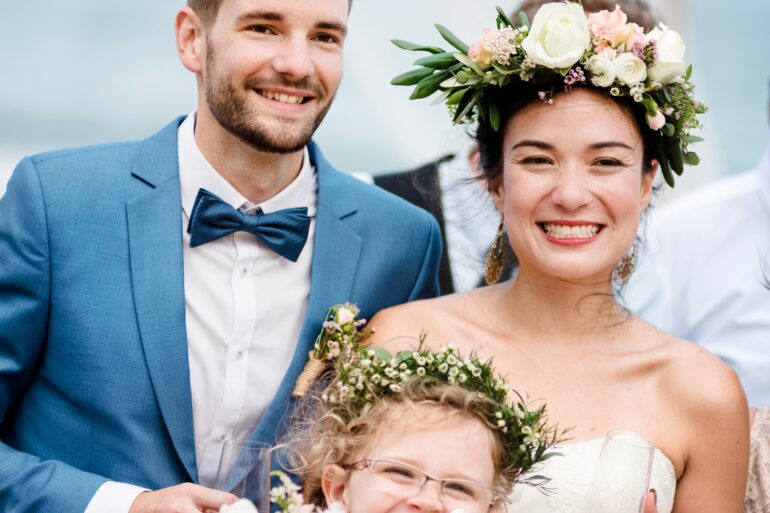
A blended wedding marks a new family structure that children will experience long after the reception ends. Careful planning gives everyone a clear place in the celebration without turning the ceremony into a performance. Couples should match each decision to the child’s age and temperament while respecting their relationship with the new family unit. Use these tips for planning a blended wedding.
Invite Children Into the Planning
Children respond best when adults explain what will change and what will stay familiar. Share the wedding plan in language that matches each child’s age, then ask how they want to take part. A direct conversation gives children room to express concern without forcing enthusiasm.
Use each child’s answers to shape one meaningful role rather than assigning a symbolic task for appearance’s sake. Kids who are uncomfortable with a lot of attention can choose a reading or select a family photograph for display.
Give Every Child a Clear Role
Equal treatment does not require identical duties. Children occupy different places in the family, so couples should choose roles that match confidence and maturity. Explain each role before the rehearsal, including who will offer support. Clear expectations prevent confusion during an emotional day.
Keep each responsibility short enough for the child to succeed. A defined task gives ownership without assigning emotional responsibility for the ceremony. When children know what they will do, they can participate confidently while adults remain in charge.
Choose Clothing That Supports the Day
Wedding clothing should support movement rather than demand constant adjustment. Since the children will spend hours in formal clothes, choose flexible fabrics and shoes they can wear through the reception. A fitting before the wedding gives parents time to correct pinching seams or unstable hems.
The adults should apply the same discipline to their own attire. For the bride, understanding wedding dress color variations helps you select the ideal gown for your special day. That knowledge narrows the search by showing how white tones interact with skin tone and venue light. This also helps you consider colors outside of white that still read clearly as bridal.
Build Space for Emotion and Change
When planning a blended wedding that honors everyone, you should also understand that the emotional tone may look different than a traditional wedding. You’re bringing two families together, not just two people. Protect the day from avoidable outbursts by assigning one trusted adult to watch for overstimulation in the kids. That person can offer a quiet break before tension reaches the ceremony or reception.
Couples should also leave breathing room in the schedule, since rigid timing can magnify small disruptions. A short pause between major moments gives children time to reset and helps parents return their attention to the celebration. Calm planning signals that family life belongs in the wedding rather than interrupting it, giving the event greater honesty and warmth.
Begin the Next Chapter Together
When couples give children a defined place in the day, the wedding becomes a credible beginning for the household they are building. Plan with enough structure to create security, then leave enough room for each child to enter the celebration in a way that suits them.