Creating spaces where children of all psychical and neurological abilities can play and thrive is important for fostering happy, healthy, safe development. Autism-friendly playgrounds provide safe, engaging environments that cater to the unique needs of children on the autism spectrum. If you’re designing an autism-friendly playground, read on to learn the essentials and how to make the space both welcoming and functional.
Intuitive Layout and Equipment
Autistic children feel more comfortable in spaces where structure and predictability exist. Clear pathways, distinct activity zones, and easy-to-navigate layouts help them feel less overwhelmed.
Playgrounds should guide children naturally from one activity to another without confusion. Equipment choices should also support this.
Sensory Elements
Children on the autism spectrum process sensory experiences differently. Sometimes, the sensory input at playgrounds can feel overwhelming or bad. Sensory-friendly elements give autistic children something to calmly enjoy or ground themselves with.
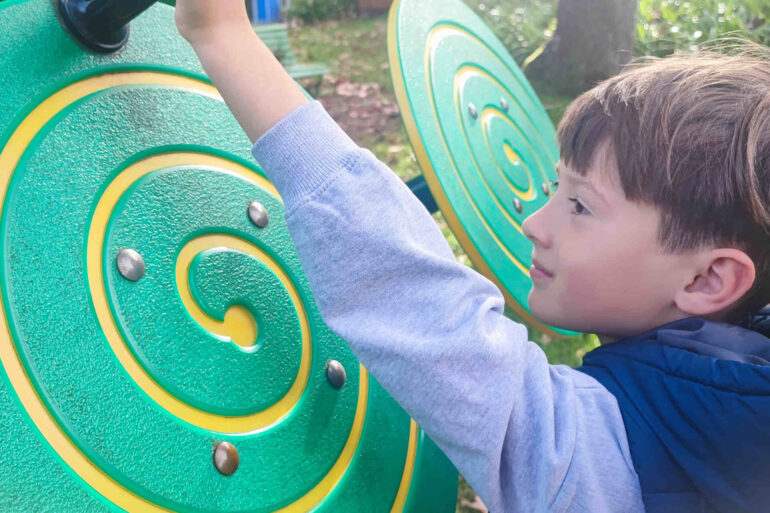
Add essential playground accessories for sensory play, such as musical panels, textured surfaces, and water features. These types of equipment help engage senses in a controlled way. Quiet zones—spaces where children can unwind if they feel overstimulated—are equally important, and we’ll touch on these more below. Focus on variety and moderation, making sure the playground caters to different sensory preferences.
Fencing
Autistic children are particularly prone to wandering off unpredictably. Proper fencing gives peace of mind to both parents and caregivers by ensuring children stay within the play area.
Install a perimeter fence with a secure gate. The design should be both functional and friendly-looking. For example, bright but calming colors or materials that reduce noise can help a fence feel less restrictive while still keeping the area enclosed. Importantly, the layout should prevent access to dangerous surroundings like streets or unsecured water features.
By prioritizing thoughtful layouts, sensory elements, and safety features, you can create a playground where all children feel welcome, safe, and comfortably engaged. These essentials of autism-friendly playgrounds make a meaningful difference in the lives of children who struggle in stimulation-rich environments. These playgrounds are more than just spaces to play—they’re places to grow, learn, and connect.