Once the patio furniture goes into storage, it’s tempting to leave the deck alone until spring. You’re spending less time outside, and heading out to do maintenance probably isn’t your favorite cold-weather activity.
Still, maintaining your deck during winter doesn’t have to turn into a weekend project. Most of the work involves dealing with moisture before it sits too long and removing snow without damaging the surface underneath. A little care throughout the season leaves you with less to repair when you’re ready to spend time outside again.
Sweep Away Wet Leaves
Leaves left on your deck absorb water and stay damp against the boards. As they break down, they can stain the surface, so removing them before snow covers them saves you a mess later.
A soft-bristle broom works for loose leaves without scraping the decking. For leaves stuck to wet boards, gentle brushing is preferable to scraping at them with a metal tool.
Wind pushes leaves beneath furniture, where they collect out of sight. Sweeping those sheltered areas during the same pass keeps damp piles from sitting undisturbed for weeks.
Keep Board Gaps Open
Gaps between deck boards give rain and melting snow somewhere to drain. When debris fills those openings, water lingers around the board edges instead of passing through.
After sweeping the surface, check for material wedged between the boards. A narrow plastic tool lets you loosen shallow buildup without gouging the edges, provided you work gently and don’t force it into a tight opening.
The purpose is to remove debris, so there’s no need to pry the boards apart. If drainage remains poor after cleaning, a deck professional can check whether the installation spacing needs correction.
Store Outdoor Rugs for the Season
An outdoor rug holds moisture beneath it long after the uncovered decking has dried. During winter, repeated snowmelt keeps adding water to that covered area, leaving the boards with little opportunity to dry.
Putting the rug away removes that barrier for the rest of the season. Once you lift it, check the decking underneath for damp debris and remove any buildup before it freezes.
The rug itself needs time to dry before storage, too. Hanging it where air reaches both sides prevents you from rolling up trapped moisture and leaving it enclosed until spring.
Raise Planters Off the Boards
A planter sitting flat on your deck traps moisture beneath its base. Because the pot covers that area continuously, the decking underneath dries more slowly than the surrounding surface.
If you’re leaving planters outside, pot feet create a gap that allows drainage and air movement beneath them. The supports need to suit the container’s weight and keep it stable without damaging the boards.
You’ll still need to check beneath the raised pot occasionally. Leaves can collect in that small space and restrict drainage. Removing them keeps the opening from filling up again.
Use a Plastic Shovel for Snow
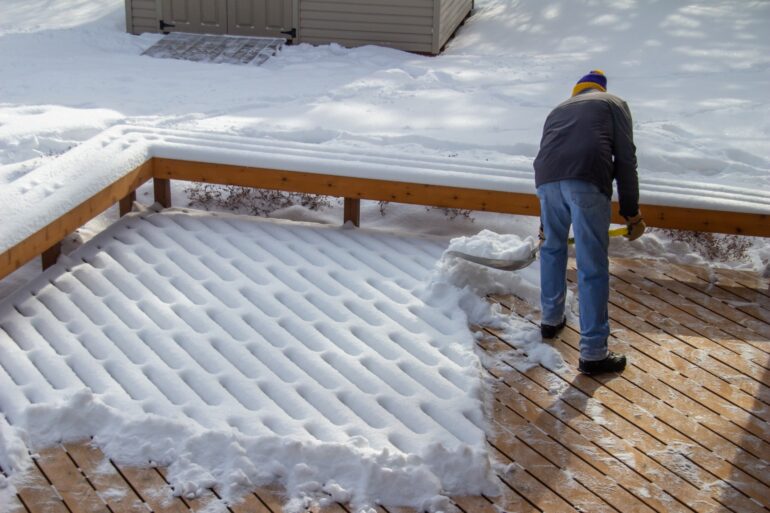
A metal shovel edge can scratch composite decking or gouge wood when it catches the surface. If your decking manufacturer permits shoveling, a plastic blade without a metal wear strip reduces that risk.
Moving the shovel parallel to the boards keeps it from repeatedly crossing their edges. Light passes give you more control, so you’re less tempted to force the blade beneath snow that’s frozen in place.
A thin layer that won’t lift isn’t a reason to scrape harder. Leaving it for an approved ice treatment or a thaw avoids turning snow removal into surface repair.
Check Ice Melt Compatibility
An ice melt labeled for sidewalks isn’t always safe for your deck. The wrong formulation can damage the finish or leave discoloration.
Your decking manufacturer’s care instructions should identify which types of ice melt you can use. Checking those recommendations before buying a bag lets you confirm that the ingredients won’t harm your decking.
Once you’ve selected a compatible product, follow the application rate on its label. Adding extra leaves more residue without improving the result, and you’ll need to clean up that residue as the manufacturer directs when weather allows.
Fix Loose Railing Connections
A railing that shifts where the rail meets a post needs repair before you rely on it for support. A loose fastener may explain the movement, but tightening it won’t fix damaged material around the attachment.
The repair should address the cause of that movement. If a connector has deteriorated, choosing compatible railing parts allows the replacement to attach as the existing system requires.
Movement at the post’s base calls for a closer inspection of its structural attachment. Keep people away from the loose section until a qualified professional determines what needs repair and completes the work.
Redirect Downspout Runoff
A downspout that empties onto your deck repeatedly wets the same boards during a thaw. When temperatures fall again, that water freezes and leaves an icy patch even after you’ve removed the snow.
Watching the outlet while roof snow melts shows you where the runoff lands. If it pours onto the decking, removing surface ice won’t stop the problem from returning.
A downspout extension can carry that water beyond the deck to a suitable drainage area. The outlet needs to direct runoff away from your foundation without sending it across a walkway where it’ll freeze again.
Keep Snow Piles Off the Deck
Pushing snow into a corner opens a walking path, but it leaves all that weight on the deck. The resulting pile concentrates the load in one area and takes longer to melt than a shallow layer.
When you remove snow, move it off the deck rather than banking it against the railing. The landing area below needs to remain free of people, and the snow shouldn’t block an exit.
If heavy accumulation makes you question the deck’s capacity, stay off it and seek professional advice. You shouldn’t have to stand on a questionable structure to assess it.
Save Sealing for Suitable Weather
A worn patch on a wood deck may tempt you to squeeze in a quick coat of sealer. However, a mild afternoon alone doesn’t provide the conditions a coating needs to adhere and cure.
The product’s instructions specify acceptable temperatures and surface moisture conditions. Boards that remain damp from melting snow aren’t ready for treatment simply because the air has warmed up.
Overnight temperatures need to stay within the coating’s limits for the required curing period, too. Waiting for a suitable stretch of weather prevents a rushed application from peeling and creating additional work in spring.
Keep Winter Deck Care Simple
Maintaining your deck during winter is something you can handle a little at a time as weather allows. Dealing with a small problem when you notice it keeps it from sitting untouched for the rest of the season.
There’s no need to chase a summer-ready appearance in the middle of January. Give the surface time to dry between storms, and let the condition of your deck guide how much work you take on.