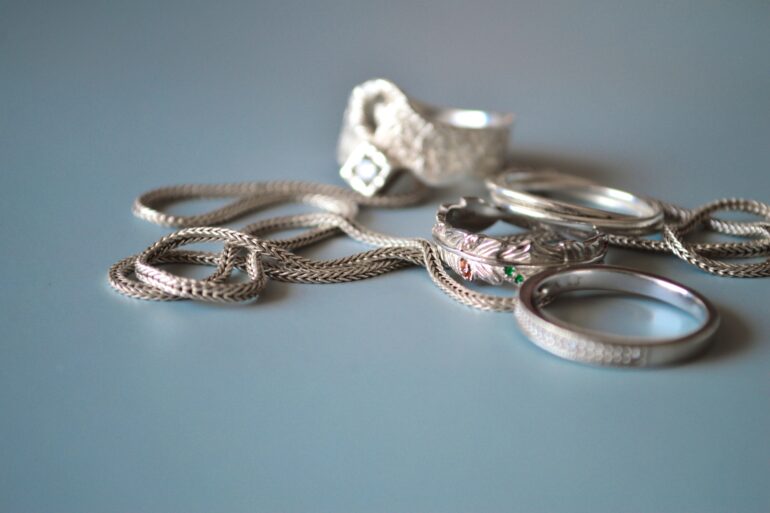
Sterling silver is an incredibly popular material for rings, necklaces, earrings, and just about every other piece of jewelry you can think of. It consists of 92.5% silver, with copper mixed in to give the metal its strength and durability. How much do you know about what’s actually in your jewelry box? We’re here with some facts about sterling silver that will have you going, “Wait, seriously?”
Navajo Silversmiths Shaped the Art Form
Did you know that sterling silver has a fascinating history tied to Navajo jewelry? In the mid-1800s, a Navajo man named Atsidi Sani became the first of his people to learn silversmithing from a Mexican craftsman. He then taught the skill to others in his community, and those techniques evolved into the intricate stamping and stonework that defined Navajo silver pieces for generations. The jewelry wasn’t decorative. It marked identity, ceremony, and status within the culture, which is why the tradition held so strongly even as outside influences shifted what was available and popular.
The “.925” Stamp Is a Guarantee
Flip over a sterling silver piece and you’ll often spot a tiny stamp that reads “.925.” That number refers to the 92.5% silver content required for a piece to legally qualify as sterling in most countries. The remaining 7.5% is typically copper, and that specific ratio exists because it’s the point where the alloy becomes hard enough to hold detailed shapes without losing the properties that make silver worth using.
The stamp itself became standardized in the UK through hallmarking laws dating back to the 14th century, and that system eventually influenced how silver gets certified worldwide.
Copper Is What Makes It Wearable
Pure silver is too soft to hold a shape under daily wear. That’s where copper steps in. A small percentage of copper is alloyed into the silver to give the final metal enough hardness to survive rings being knocked around and necklaces being tossed into a drawer. The tradeoff? Copper is also what causes tarnish over time. So the same ingredient that makes sterling silver practical is the one that eventually turns it dark.
Tarnish Doesn’t Mean Damage
Speaking of tarnish, seeing your silver go dark doesn’t mean the piece is ruined. Tarnish is a surface reaction between the copper in the alloy and sulfur compounds in the air. It sits on top of the metal, not inside it. A soft cloth and a little silver polish bring the shine right back. Some collectors actually prefer a patina that builds up over time because it gives older pieces more character.
Your Skin Can Actually Affect the Metal
Sterling silver reacts differently depending on who’s wearing it. Body chemistry, lotions, and even certain medications change how quickly the metal tarnishes or how dark it goes. Two people wearing the same ring can see completely different results. If your silver seems to tarnish faster than expected, your skin’s natural oils are probably a factor. Storing pieces in a cool, dry place when you’re not wearing them slows that process down.
Silver Has More to It Than Meets the Eye
Did you know any of these facts? Sterling silver jewelry sits at an interesting intersection of chemistry and craftsmanship. The metal that looks simple in a display case is actually doing a lot of work to stay wearable, stay beautiful, and stay meaningful across different cultures and centuries. Now that you know what goes into it, you’ll probably look at your favorite pieces a little differently!