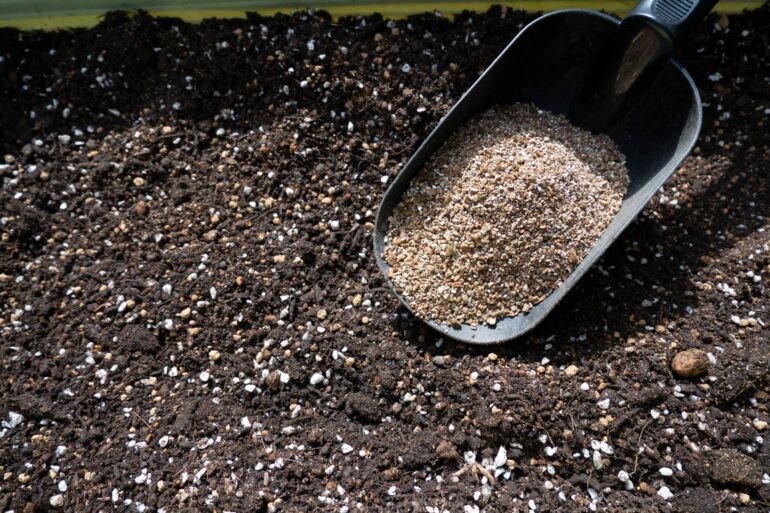
Your garden’s soil sometimes needs a little help. It might naturally be too dense, acidic, or otherwise unfit for optimal plant growth. Soil amendments are substances you add to the soil to improve its ability to support healthy plant growth. Vermiculite and perlite are two such amendments with a few differences and uses. Explore what you need to know for your garden below!
What Is Vermiculite?
Vermiculite is a lightweight, spongy material created by heating a naturally occurring mineral. It appears as little accordion-like flakes. Vermiculite stores water while slowly releasing it, creating a steady supply of moisture for your soil.
If your soil is too dry or doesn’t hold onto water well, then this amendment could be very useful. Just remember that, as with anything you introduce to your plants, gardening with vermiculite has a few pros and cons. Still, it’s a great option to consider, especially if you use it as a top layer for seed trays or a boost for tropical, water-loving plants.
What Is Perlite?
Perlite is also a naturally occurring material, but it’s made from volcanic glass. When it’s heated at high temps, it puffs up into lightweight, white pellets you might recognize in potting mixes. Unlike vermiculite, perlite is all about keeping your soil light and airy.
The main purpose of perlite is to improve soil drainage and aeration. The amendment adds volume and structure to soil and prevents waterlogging and compaction. Cacti and other desert plants usually need perlite to thrive, but many other plants benefit as well.
How To Use These Soil Amendments
Here’s the gist of the differences and uses: vermiculite improves water retention, and perlite improves water drainage. Though these are technically opposite functions, many gardens actually benefit from the use of both for a well-balanced soil composition.
Whether you choose to use one or both, the application process is essentially the same. Wear gloves and a respirator mask for safety, and simply mix the amendment into the soil based on its ratio instructions.
Then, monitor your plants’ growth. If they start doing better, great! If not, consider testing your soil and trying a different amendment. Gardening involves trial and error, but we hope vermiculite or perlite can solve the problem you’re facing.