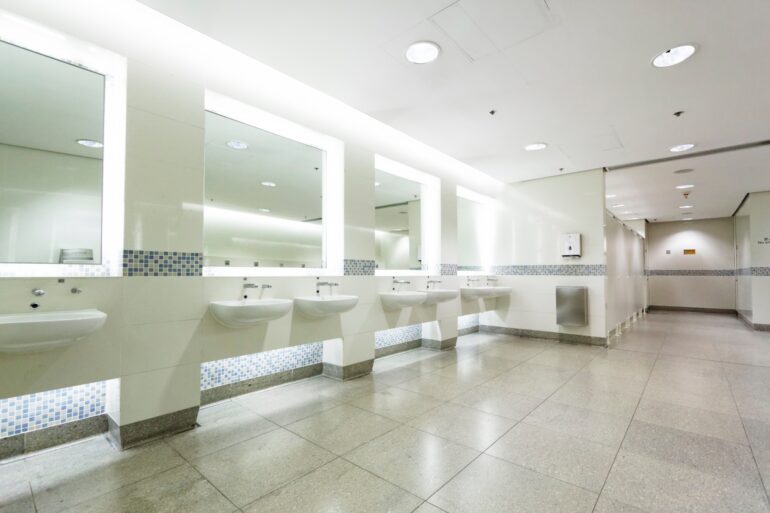
A more accessible public restroom makes everyone feel comfortable, welcome, and able to move through the space with less stress. Good accessibility also enhances daily functions, which is important in schools, offices, restaurants, medical buildings, and retail spaces.
Small changes can create a significant impact. Viewing the room from a visitor’s perspective makes it easier to identify barriers that hinder people or complicate simple tasks. These are the ways to make your public restroom more accessible.
Clear the Path
Start with the layout. People need enough room to enter, turn, and move without bumping into fixtures, trash cans, or cleaning carts. A crowded restroom can feel frustrating for anyone, but it can create major problems for people who use wheelchairs, walkers, or other mobility aids.
Keep walkways open and keep floor space around sinks, stalls, and entry points as clear as possible. If you store supplies in the restroom, place them where they won’t block movement or create hazards.
Improve Fixtures
Accessible design works best when fixtures feel easy to reach and simple to use. Sinks, faucets, hand dryers, and paper towel dispensers should sit at practical heights and work without requiring too much force.
Touch-free options can help a lot here. When you update handwashing stations, pick the right automatic soap dispenser so visitors can wash their hands without struggling with stiff pumps or awkward placement. That one upgrade can make the space easier to use while also improving hygiene.
Make Stalls More Usable
Accessible stalls require more than just a wider door. They should provide enough space for people to move comfortably and to use grab bars confidently. Toilet paper holders, hooks, and flush controls should also be positioned within easy reach.
Check the door hardware too. If a latch feels difficult to grip or the door swings in a way that limits movement, the stall won’t work as well as it should. Practical details like these shape the full experience.
Add Better Signs
Signage helps people locate the restroom and understand what features are available before entering. Clear signs with readable text and braille can reduce confusion and make the building easier to navigate.
You should also consider contrast and placement. Signs that blend into the wall or sit too high can frustrate visitors who need quick, clear directions.
Keep It Comfortable
Accessibility doesn’t end after installation. A restroom remains accessible only if staff keep it clean, stocked, and functioning properly. A broken faucet, empty dispenser, or loose grab bar can quickly turn a usable room into a difficult one.
Regular checks help you catch problems early. They also show visitors that the space was designed with real people in mind.
Make Every Visit Easier
An accessible public restroom supports excellence, comfort, and independence. When you focus on layout, fixtures, signage, and upkeep, you create a space that works better for everyone who walks through the door.