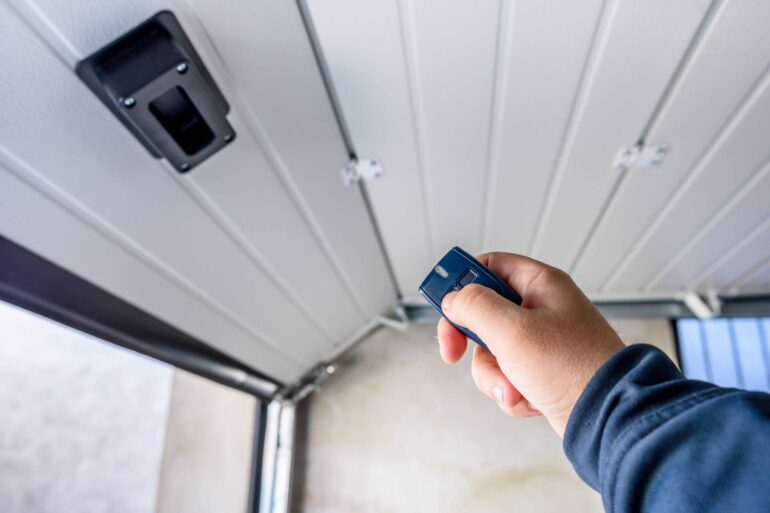
Depending on where you live, you might refer to it as a garage door, an electric roller door, or an automated entry system. Styles vary—from up-and-over to sectional or side-hinged—but regardless of the type, the underlying mechanics often work similarly.
No matter where you call home, garage doors make odd sounds. Some are harmless; others are early signs of trouble. Let’s explore five types of garage door noises and what they could mean so that you can take the right action.
1. Grinding or Scraping
If your roller door sounds like it’s dragging something heavy across a metal floor, it could be grinding. This sound typically happens when metal parts come into contact that shouldn’t, such as misaligned tracks rubbing against the rollers or a buildup of debris stuck in the rails.
It’s also possible that the door itself is bent or the worn-down rollers are causing friction as the door moves. Left alone, this can lead to more serious wear on the system.
2. Banging or Slamming
A loud bang or slam, especially when the door opens or closes, often signals a broken or failing spring. Torsion and extension springs bear immense weight, and when one fails, the door can move too fast or drop unexpectedly.
You might also hear banging if the door panels are loose or if the closing speed is set too high. In any case, it’s worth inspecting before it damages any of the door’s components.
3. Squeaking or Squealing
That high-pitched squeak may not seem serious, but it’s often a warning that lubrication is overdue. Hinges, rollers, and bearings should all be greased regularly with silicone-based lubricant or white lithium grease.
If you’ve already applied lubricant and the noise persists, the squealing may indicate worn rollers or metal parts grinding against each other. Either way, it’s usually one of the easier problems to fix.
4. Rattling or Vibrating
Rattling noises typically happen because of loose nuts, bolts, or screws shake while the door is in motion. These can come from the tracks, mounting brackets, or within the door itself.
The noise level may also depend on the differences between chain and belt-drive garage doors. Chain-driven systems tend to produce more vibration and noise. However, if the rattling gets louder, it might be time to inspect the motor and mounting system.
5. Clicking or Ticking
A steady clicking or ticking sound, particularly near the motor unit, signals an issue with the control board or safety sensors. It may also indicate interference from remotes or a fault in the wiring.
While this sound may not initially affect door movement, it’s often a sign of an electrical issue. Addressing it early can save you from motor failure or system lockouts.
Address Noisy Doors Today
Odd sounds aren’t just annoying; they’re your door’s way of asking for attention. By understanding these five types of garage door noises and what they could mean, you’ll be better prepared to deal with small issues before they become major problems. Don’t hesitate to call a professional if you’re unsure.