Learning piano opens doors to musical expression and cognitive benefits that last a lifetime. Many adults assume they’ve missed their chance, but you can start at any age and make meaningful progress with the right approach. This guide breaks down the essential first steps to take if you want to start learning piano.
Find a Qualified Teacher or Online Resources
Your first decision involves choosing between in-person lessons and online learning. Finding the right piano teacher matters for beginners to build their foundational skills. A qualified teacher provides personalized feedback, corrects bad habits early, and keeps you motivated through challenging periods. Look for instructors with formal training and teaching experience who match your learning style.
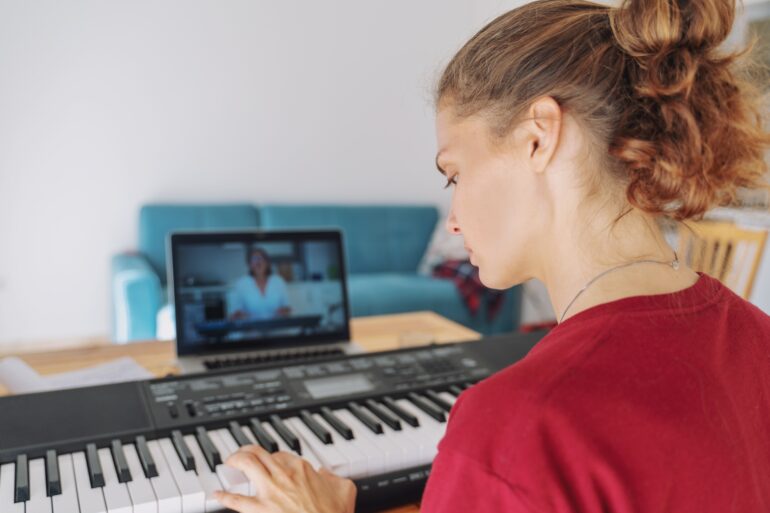
Online resources offer flexibility and often cost less than private lessons. YouTube tutorials and virtual lessons or services provide structured lessons you can take at your own pace. Many successful pianists combine both approaches, using online resources to supplement regular lessons.
Find a Piano or Keyboard
You need a quality instrument to practice effectively. An acoustic piano offers the best touch sensitivity and sound quality but requires significant space and regular tuning. Digital pianos provide a more practical alternative with weighted keys that simulate acoustic piano feel.
Keyboards work well for beginners on a budget, though you’ll want at least 61 keys and touch sensitivity for proper technique development. Avoid mini keys or keyboards without velocity sensitivity, which can hinder your progress and development of proper finger strength.
Learn Basic Music Theory
Music theory provides the framework for understanding how music works. Start with learning the white and black keys on the piano. The pattern of white keys follows the musical alphabet from A to G, while black keys represent sharps and flats.
Focus on understanding basic note values like whole notes, half notes, and quarter notes. Learn to read simple melodies in treble clef first, then gradually add bass clef reading. Understanding time signatures and following along with a metronome will help you maintain steady rhythm while playing.
Set Up a Practice Schedule
Consistent practice matters more than long practice sessions. Aim for 15 to 20 minutes daily rather than cramming several hours into one session. Regular practice builds muscle memory and helps your brain process new information without burning yourself out during long sessions.
Create a dedicated practice space free from distractions. Track your practice time, and set specific goals for each session, whether that’s mastering a particular passage or learning new scales.
Your Musical Journey Starts Now
Now that you know what to do to start learning piano, you can begin your journey with confidence and clarity. Learning piano requires patience and persistence, but the rewards justify the effort. Start with one step from this guide, whether that’s finding a teacher or shopping for an instrument. Practice consistently, and celebrate small victories along the way. Your musical journey awaits!