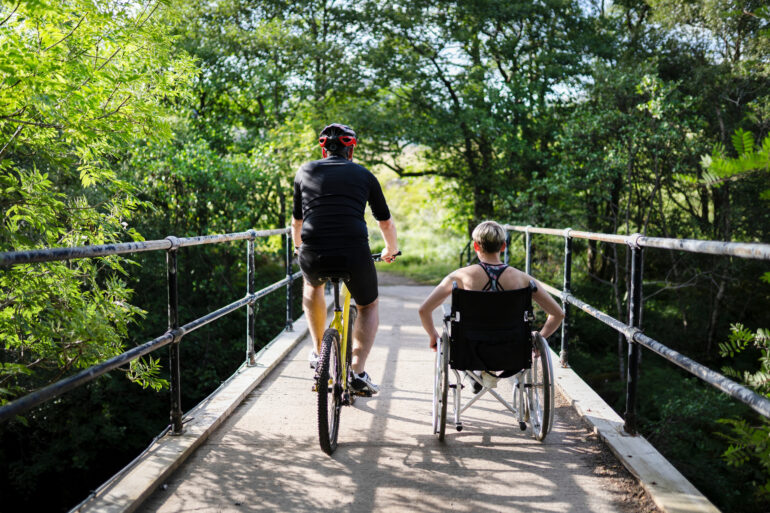
Every single person can benefit from the immense physical and emotional benefits of spending time in the great outdoors. Even if you use a wheelchair to get around, you’re by no means cut off from adventures in nature. However, you will need to invest in a bit of extra research, planning, and gear to make sure your time outside is safe, convenient, and enjoyable.
That’s what this blog is here to help with. Below is a complete guide to getting outdoors in a wheelchair. We will review the basics of preparing for an accessible adventure in nature, the best wheelchair-friendly outdoor activities, and additional tips to bolster your confidence.
How To Prepare for an Accessible Outdoor Adventure
First, let’s review the most important stages of preparing for a wheelchair-friendly outdoor trip. These include researching your options, securing accommodating transportation, planning with a friend, and gearing up with accessible items.
1. Do Your Research
Not all outdoor spots are convenient or even safe for wheelchair users, so make sure to do your research before heading out. You want to look for places with paved paths, accessible parking, ADA-compliant restrooms, ramps, and clear signage. If you use AllTrails or Access Earth, you can filter for wheelchair-accessible locations, making it easier to find suitable parks, trails, or nature reserves near you.
If you’re ever unsure about a location’s accessibility, you might be able to call ahead. Parks and recreation centers will provide you with detailed information about their facilities. Unfortunately, this isn’t an option for unstaffed trails.
2. Secure Accessible Transportation
Most outdoor destinations aren’t conveniently located off major highways. Sometimes, you’ll need to venture over rocky, bumpy roads. Look into the performance ability of various accessible vehicle types, such as accessible trucks, to find a mode of transportation that will safely get you to outdoor spots.
3. Make Plans With a Friend
Going with a friend is crucial to ensure your safety should something go wrong. Your friend can drive you both to the spot, help your wheelchair get over rough patches in the terrain, and simply make your time easier in every respect. As you plan your trip, make sure to include someone you trust.
4. Gear Up for Accessibility
Beyond an accessible vehicle, you need additional specialized equipment and gear to support your adventure. Here are a few essentials to consider:
All-Terrain Wheelchairs
If you’re exploring less-paved paths, an all-terrain wheelchair or wheelchair attachments will offer better stability and grip. GRIT, AdvenChair, and Freedom Trax are three examples of specialized outdoor wheelchair brands. Their all-terrain designs allow users to traverse tricky land, such as uneven forest paths and sandy beaches.
Portable Ramps
If you’re visiting areas with occasional steps, a lightweight, foldable ramp will be super helpful.
Comfort Accessories
You won’t regret bringing cushions, gloves for pushing, and a canopy for sun protection.
Storage Solutions
Attach a sturdy bag or basket to your wheelchair so you can carry snacks, water bottles, and other small supplies.
Stick To Outdoor Activities Fit for Wheelchair Users
The second most important part of accessible nature exploration is knowing what activities are wheelchair friendly. Though you probably won’t be summiting mountains, there are hundreds of immersive outdoor experiences for you to enjoy freely. Below, we review some of the most popular and exciting activity options.
1. Nature Trail Exploration
You can find thousands of parks featuring wheelchair-accessible trails with smooth, compact surfaces. Plus, if you want more of a challenge and have an all-terrain wheelchair on hand, you can choose from the equally large pool of dirt paths with moderate elevation. Just select a trail that aligns with your comfort level.
2. Playing Adaptive Sports
Want to lean into your athletic side? Adaptive sports are a great option. These activities are opportunities to enjoy outdoor adventures in new and exciting ways and meet new people. Handcycling and kayaking are two popular options that will truly immerse you in nature. But if you simply want to be outside, then you can consider adaptive team sports, like tennis or basketball.
3. Heading to the Beach
Beach days can easily become accessible! With a sand-ready wheelchair attachment (or a rental with super wide tires), you can take your mobility device onto the shore. This works at any beach, but you’ll have an easier time if you head to more developed strips with smooth pathways and sand mats.
4. Trying Your Hand at Birdwatching or Photography
The outdoors is the perfect place for reflection and creativity, and what better way to enjoy these things than with birdwatching or photography? Head to a national wildlife refuge (which are almost always accessible to some degree) to witness beautiful scenery and abundant wildlife. Then, snap some photos or simply take it all in with a keen eye.
5. Camping
Camping is another exciting, easily accessible way to experience the outdoors. There are plenty of wheelchair-friendly campgrounds that offer paved tent areas and accessible bathrooms. Some even have cabins designed specifically for wheelchair users.
Look for ADA-accessible state and national park campgrounds as you research your options.
6. Joining Accessible Outdoor Communities
You are not the only wheelchair user wanting to explore the great outdoors. Dedicated communities and organizations, such as Disabled Hikers and Adaptive Adventures, empower people with limited mobility to experience nature in exciting ways. Sign up with these communities to get assistance with your outdoor exploration and meet amazing people along the way.
Start Small and Build Up
Our last tip in this complete guide to getting outdoors in a wheelchair is to start small. If you’re new to outdoor activities or being in a wheelchair, there’s no pressure to overdo it. Start with a short visit to a nearby park, and gradually work up to longer outings or more challenging trails as you gain comfort. Eventually, you’ll get the skills and confidence to explore more freely.
As you embark on each trip to nature, remember how great of a thing you’re doing for yourself. Not only are you engaging your mind and body in a very healthy way, but you’re also stepping out of comfort zones and expanding your horizons. Each time you step outside, it contributes to your well-being and builds a deeper connection between you and the world around you. You’ve got this!