Industrial facilities have relied on harsh chemicals and wasteful practices for decades. These methods get the job done, but they come at a steep environmental cost. Fortunately, the tide is shifting. More businesses are discovering eco-friendly alternatives to traditional industrial cleaning that protect the planet, improve worker safety, and reduce long-term costs. Let’s explore some of the most effective green cleaning solutions available today.
Why Traditional Methods Fall Short
Conventional industrial cleaning often involves toxic solvents, acids, and degreasers. These substances can contaminate water supplies, harm ecosystems, and pose serious health risks to employees. Additionally, the disposal of chemical waste creates ongoing environmental challenges.
Beyond the ecological damage, traditional cleaners can corrode equipment over time. This leads to higher maintenance costs and shorter machinery lifespans. The good news? Greener methods exist that address these issues head-on.
Plant-Based Cleaners
For tasks that do require a cleaning agent, plant-based formulas offer a powerful alternative. These products derive their cleaning power from natural ingredients like citrus oils, soy, and coconut extracts. They break down grease and grime effectively without releasing harmful fumes or leaving toxic residues.
Many plant-based cleaners are biodegradable, so they won’t linger in the environment after use. They’re also safer for workers to handle, reducing the risk of chemical burns or respiratory issues.
High-Pressure Water Blasting
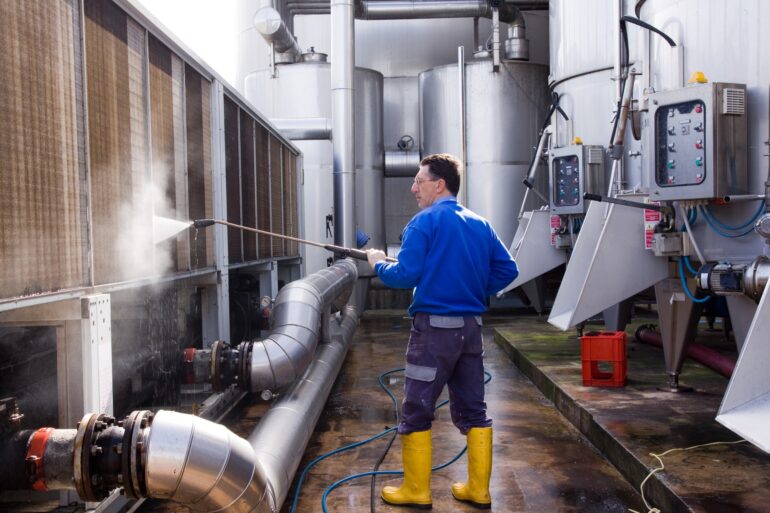
One of the most impressive innovations in industrial cleaning is high-pressure water technology. This method uses pure water under extremely high pressure to remove dirt, grime, and even stubborn coatings. The science of ultra-high-pressure water blasting has proven that water alone can achieve results once thought to require harsh chemicals.
This approach eliminates the need for toxic substances entirely. It’s also highly versatile, capable of cleaning everything from large machinery to delicate surfaces. Plus, the water used can often be filtered and recycled, minimizing waste.
Steam Cleaning
Steam cleaning harnesses the power of heat to sanitize and degrease surfaces. Using superheated water vapor, this method kills bacteria and loosens dirt without any chemicals. It’s particularly useful in food processing plants, where hygiene is of greatest importance.
Additionally, steam cleaning equipment requires only water and electricity, making it a sustainable choice for facilities aiming to reduce their chemical footprint. Moreover, it leaves surfaces dry quickly, minimizing downtime.
Making the Switch
Fully transitioning to eco-friendly alternatives to traditional industrial cleaning starts by evaluating your current cleaning processes and identifying which methods could benefit from greener solutions.
Training your team on new techniques is also important. Employees need to understand how to use eco-friendly methods safely and effectively. With the right support and resources, your facility can achieve cleaner operations while protecting both people and the planet.