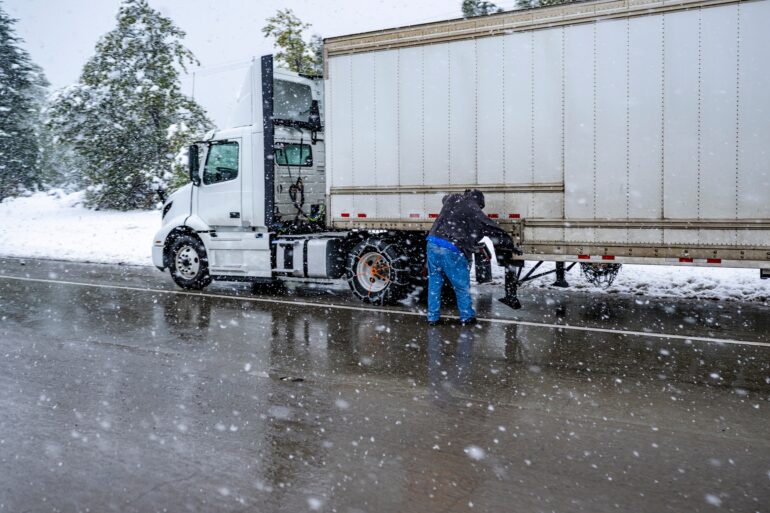
The colder months can be hazardous to drive through, especially when you’re towing a large trailer. Follow these winter driving safety tips for truckers to arrive at your next destination safely and prevent breakdowns on the road.
Perform Thorough Pre-Trip Inspections
Before heading out on slick roads, check your tire tread depth to determine if you have adequate grip for slippery surfaces. Also, inspect your braking system thoroughly, as wet and icy conditions require optimal stopping power. For snowy conditions, testing all lights and electrical systems will ensure proper visibility on the road.
Maintain Proper Tire Pressure and Chains
Cold weather can cause a sudden drop in tire pressure, putting your safety and vehicle performance at risk. Without proper preparation, facing slippery roads or emergency situations can become even more dangerous.
Check your tire pressure daily, and adjust it to the manufacturer’s specifications. Also, carry tire chains, practice installing them ahead of time, and familiarize yourself with chain regulations for various states and mountain passes to stay prepared.
Stock Emergency Supplies
Winter emergencies can strand drivers for hours or even days, so pack spare parts for your semitruck that can handle minor repairs during extended stops. Stock blankets, extra clothing, nonperishable food, water, flashlights, and a first aid kit to protect yourself in a snowstorm. With these resources in your truck, you’ll stay comfortable and safe in severe weather conditions.
Adjust Your Driving Technique
Reduce your speed on icy or snowy roads to allow extra following distance behind other vehicles. Using gentle inputs on the steering wheel, brakes, and accelerator, apply engine braking when going downhill instead of relying solely on service brakes. This will protect truckers and other drivers on the road from accidents.
Plan Routes and Monitor Weather Conditions
Before departing from your warehouse or facility, identify alternative routes and safe parking areas in case conditions deteriorate. Use weather apps and CB radio channels to get real-time updates from other drivers about road conditions ahead. These services keep truckers safe as they drive in the winter, so follow their tips if conditions worsen.
Keep Fuel Tanks Full
Maintain full fuel tanks to prevent fuel line freeze-up and guarantee that you have enough fuel for extended idling during delays. Winter driving and idling consume more gas, so plan stops accordingly. For additional support, consider using fuel additives designed to prevent gelling in cold temperatures.
If severe weather conditions force you to stop, find a safe location away from traffic, and turn on your hazard lights. Stay with your truck, run the engine periodically for heat, and ensure your exhaust pipe remains clear of snow. By seeking shelter and keeping your vehicle safe in these environments, you’ll be able to head back on the road when conditions are clear.