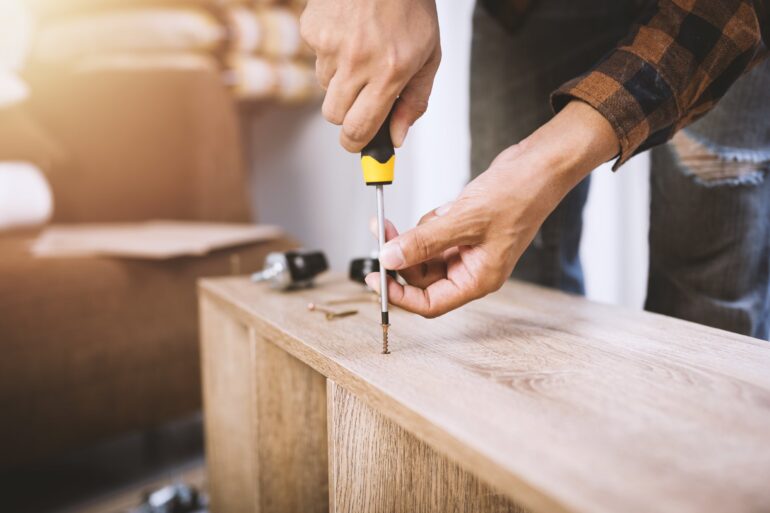
Building your own cabinets is a rewarding and cost-effective way to add a personal touch to your home. Whether you’re a seasoned DIY enthusiast or just starting your woodworking adventure, these four essential tips for building your own cabinets will save you time and money. Read along to explore everything you need to know before you start building.
1. Plan and Measure Carefully
Make sure you take the time to plan everything out before you even think about grabbing a piece of wood. Use a tape measure to figure out the exact dimensions of your space, and then sketch out your cabinet design. Your sketch doesn’t need to be fancy—just a rough layout will do the trick. A solid plan ensures you buy the correct amount of materials and prevents costly mistakes later.
Additionally, always double-check your measurements. An inch too short or too long can throw off the entire project, so precision is everything.
2. Choose the Right Materials
Plywood is a solid and affordable choice for the cabinet body for beginners. Opt for hardwood veneers or pure hardwood for a premium finish on your cabinet doors. Whatever materials you choose, ensure they are sturdy enough to handle wear and tear while looking fantastic.
Don’t forget to gather other materials, such as wood glue, screws, and sandpaper. With high-quality tools, you’ll enjoy a smooth building process and long-lasting cabinets.
3. Use Cabinet Fasteners for a Sturdy Build
Cabinet fasteners provide a strong hold and a stylish look and act as the backbone of your cabinet’s construction. Your cabinets could sag or fall apart over time without sturdy fasteners. You’ll typically use screws to assemble the cabinet frame. Use specialized fasteners, such as pocket hole screws, cam lock fasteners, or metal brackets, to attach hinges or interior shelves.
Pocket hole screws are perfect for a beginner-friendly fastener that still offers a seamless finish. Use a pocket hole jig to drill angled holes, making it easier to join panels without splitting the wood. This tool will keep your cabinets rock-solid while showcasing a polished look.
4. Don’t Skip Sanding and Finishing
Sanding and finishing might feel tedious, but these steps are worth it every time. Smooth any rough edges with fine-grit sandpaper to avoid splinters and achieve professional-looking cabinets. Once you finish sanding, apply a stain, sealant, or coat of paint to protect the wood and enhance its visual appeal.
Thin and even finish coats work best. A high-quality finish can elevate even basic plywood cabinets for an elegant look.
Building cabinets may seem daunting at first, but with these four essential tips for building your own cabinets, you’ll be installing them in no time. Remember, every project teaches you something new, so have fun and enjoy the process!