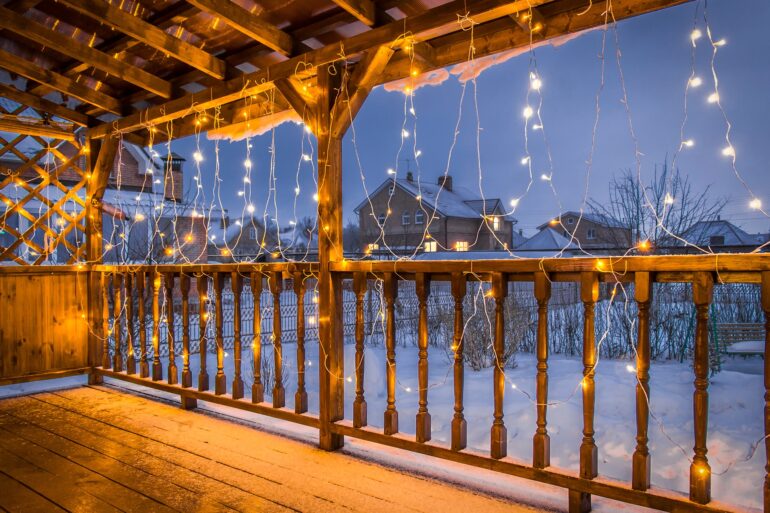
We all love that first magical snowfall. It looks like a scene straight out of a Hallmark movie, and it gives us the perfect excuse to curl up with hot cocoa, a fuzzy blanket, a good book, and no intention of leaving the house. However, once the initial oohs and aahs fade, reality hits hard. That beautiful white powder is actually a heavy, wet mess that wants to ruin the gorgeous patio you spent all summer curating.
As homeowners, we put so much love into our outdoor spaces. We pick out the perfect throw pillows, string up those cute bistro lights, plant endless pots of petunias, and finally get the grill situation sorted. Seeing all that hard work get buried under three feet of slush is heartbreaking. Besides the aesthetic tragedy, winter weather can cause serious damage to your deck, pavers, and furniture if you aren’t careful. Moisture gets into cracks, freezes, and expands, and suddenly you’re dealing with expensive repairs come spring.
Don’t panic, though. You don’t need to hire a professional crew or spend your entire weekend battling the elements. Protecting your patio from snow is actually pretty straightforward if you prep correctly. Let’s dive into a few easy solutions so it’s ready for margaritas the second the temperature hits 60 degrees.
1. Seal Your Surfaces Before the First Freeze
Concrete, wood, brick, and natural stone are all porous materials, meaning they act like sponges. When snow melts during the day and refreezes at night, that water expands inside the pores of your patio material, causing cracks, splinters, warping, and flaking.
Applying a high-quality sealant creates a barrier that stops moisture from penetrating the surface. You should look for a sealant that specifically repels water, resists salt damage, protects against UV rays, and allows the material to breathe. It’s a weekend afternoon project that saves you a massive headache later. Just make sure you do this on a dry day before the temps drop below freezing, or the sealant won’t cure properly.
2. Dress Your Furniture in High-Quality Covers
We wouldn’t go out in a blizzard without a coat, so why should your expensive wicker sectional? Leaving furniture exposed is a recipe for rust, mold, rot, and faded cushions. While it might be tempting to just throw a generic plastic tarp over everything and call it a day, that can actually do more harm than good. Cheap tarps trap moisture underneath, creating a greenhouse effect for mildew.
Instead, invest in custom-fit or high-quality universal covers. These should be made of breathable fabric, feature secure tie-downs, include vents for airflow, and offer water resistance. If you have the storage space, moving cushions into a garage or shed is always the best bet, but good covers are the next best thing for the frames.
3. Roll Out Durable Outdoor Rugs
Rugs are the unsung heroes of patio protection. Most people think of them as purely decorative, but they actually provide a fantastic physical barrier between the harsh elements and your patio floor. A sturdy, weather-resistant rug can catch snow, ice, salt, and debris before they grind into your wood or stone.
When choosing a winter rug, skip the natural fibers like jute, which will just rot. Instead, go for synthetic materials like polypropylene, nylon, or polyester. These materials don’t absorb water and dry out super fast.
Moreover, adding a rug keeps the surface slightly warmer and provides traction, so you aren’t slipping and sliding when you step out to let the dog do their business. Just remember to lift the rug occasionally on sunny days to let the patio surface underneath dry out completely.
4. Let Technology Do the Work with Heated Mats
If the idea of shoveling makes your back hurt just thinking about it, welcome to the future. Heated snow-melting mats keep your walkways clear, without you lifting a finger. These heavy-duty rubber mats plug into a standard outlet and generate enough heat to melt snow on contact.
You can place them on stairs, walkways, entryways, and high-traffic spots on the patio. It’s an investment upfront, but the luxury of watching snow disappear while you stay warm inside is absolutely priceless.
5. Install a Permanent or Retractable Awning
Stopping snow from ever hitting your patio is obviously the most effective method of protection. You can do this by installing an awning, which extends your living space and keeps the area directly underneath dry and clear. Retractable and permanent awnings are your two main choices.
While retractable awnings are great for summer shade, they often can’t handle the heavy weight of snow load. This is where a solid structure comes in handy. The benefits of stationery awnings include their durability, their ability to withstand heavy snow loads, their year-round protection, and their low maintenance requirements.
6. Sweep and Shovel—But Do It Gently
We can’t avoid manual labor entirely, unfortunately. Leaving snow to pile up is dangerous because heavy, wet snow puts weight stress on decks. So you have to remove it, but it matters how you go about this. Aggressive chipping at ice or scraping with a metal shovel is the quickest way to gouge your beautiful wood or scratch your pavers.
Treat your patio like you treat your non-stick pans. Use a plastic shovel or a stiff broom to sweep away snow regularly. Staying on top of it is key; sweeping three inches of fluff is way easier than shoveling a foot of compacted sludge.
On a related note, be careful with chemical deicers. Rock salt is harsh on paws and patios alike. Look for pet-safe, concrete-safe alternatives like calcium magnesium acetate, kitty litter for traction, sand, or even coffee grounds in a pinch.
7. Stow Away the Breakables and Decor
Finally, let’s talk about the little things. That adorable ceramic planter, the glass lantern, the quirky garden gnome, and the solar lights you got on sale—they are not built for freezing temps. Water can get into ceramic and glass, expand when it freezes, and pop—your decor is shattered.
Do a clean sweep of the area. Bring in anything made of terracotta, glass, ceramic, or thin plastic. Store them in the basement, garage, shed, or a deck box. It makes the space look tidier for winter and ensures your favorite pieces survive to see another spring. Additionally, this gives you a blank canvas to maybe add some winter-specific decor, like hardy evergreen boughs or durable metal lanterns, that can actually handle the cold.
Ready for Winter?
Winter doesn’t have to spell disaster for your backyard retreat. With these easy solutions, you protect your patio from snow and save yourself a massive cleanup job when the flowers start blooming again. It’s all about working smarter, not harder.