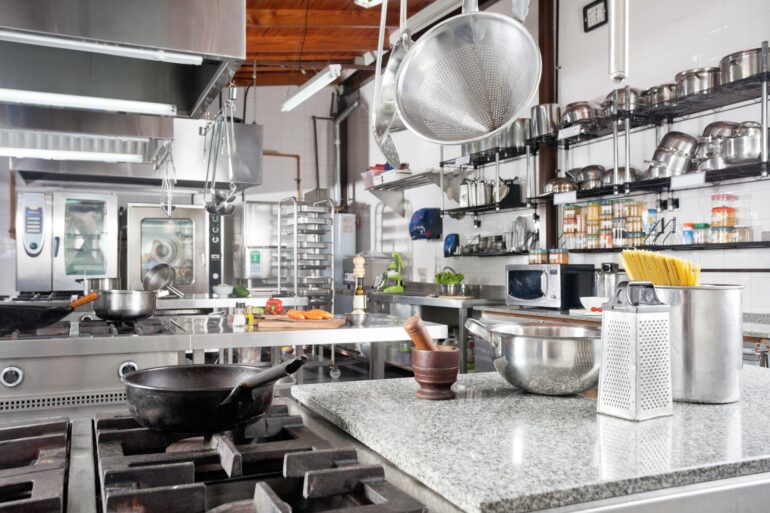
In a professional kitchen, seconds count. If a line cook has to take 10 extra steps to grab a sauté pan, or if the prep station keeps bumping into the dish pit, you aren’t just losing time. You are losing money and risking injury.
A commercial kitchen is a high-stakes ecosystem of sharp knives, open flames, and boiling liquids. Organizing this space requires a strategic approach that balances speed with safety. Whether you are designing a new restaurant or reorganizing an existing line, creating a safe and efficient kitchen setup is essential to a well-functioning restaurant.
Optimize Your Workflow Zones
Efficiency starts with the floor plan. The goal is to minimize unnecessary movement and prevent collisions with cross-traffic during the rush.
The Prep Block
This area should be distinct from the main cooking line but close enough for easy restocking. Ensure that prep tables are near walk-in fridges and dry storage to reduce the distance staff must carry heavy ingredients.
The Cooking Line
Arrangement here is critical. Equipment should be placed sequentially based on the menu. If a dish moves from the fryer to the grill and then to plating, the equipment should physically follow that order. This linear flow prevents cooks from crossing behind one another with hot pans.
Prioritize Storage and Accessibility
“Mise en place” isn’t just a philosophy for ingredients; it applies to your equipment and dry goods, too. A disorganized shelf creates frustration and slows down service, so organization is key to success.
Implement a strict labeling system for all storage areas. Every container, shelf, and walk-in section should be clearly marked. This includes non-food tools as well. Always follow best practices for storing kitchen equipment to extend its lifespan and prevent problems during service.
Invest in Safety Infrastructure
Safety features in a professional kitchen are often overlooked until an accident happens. proactive measures can drastically reduce workers’ compensation claims and keep your team healthy.
Flooring and Mats
Grease and water are inevitable. Invest in high-quality, non-slip flooring. Additionally, place heavy-duty anti-fatigue mats in areas where staff stand for long periods, such as the dish pit and the main line. These mats provide grip and reduce strain on the legs and back.
Knife Storage
Loose knives are a hazard. Install magnetic strips or dedicated knife racks at every station. Knives should never be left in sinks or obscured under towels on a prep table.
Build a Culture of Cleanliness
The best layout in the world will fail without a culture of discipline. A clean kitchen is a safe kitchen. When clutter accumulates, it blocks walkways and hides hazards.
Create a closing checklist that goes beyond basic scrubbing. It should include reorganizing stations for the next shift. When the morning crew arrives, they should walk into a reset, organized space, ready to start prep immediately.
Elevate Your Service Standards
Creating a well-organized kitchen allows for the best guest experience. Take the time to audit your current setup. Small adjustments in layout or storage can reclaim lost minutes during service and create a safer, happier environment for your staff.