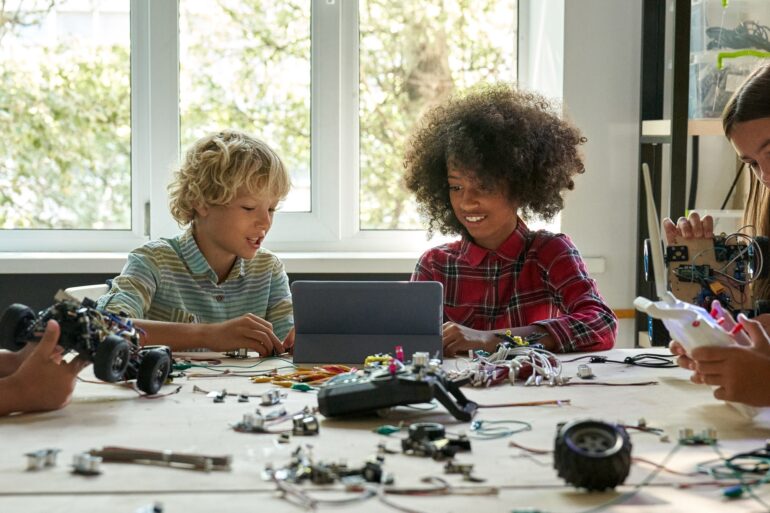
Developing entrepreneurial skills in students involves more than teaching business strategies or simply encouraging creativity. It’s about equipping them with a mindset that transforms their ability to approach problems, solve them effectively, and drive innovation. Teachers often play a central role in fostering this mindset, bringing entrepreneurial concepts into classrooms and making them accessible to learners of all ages.
These skills help students prepare not just for academic challenges but for real-world opportunities. When we foster entrepreneurial skills in students, we set them up for a lifetime of curiosity, exploration, and success.
With the right strategies, you can empower students to think critically, manage risk, work in teams, and develop solutions in fields they’re passionate about. Join us as we explore practical strategies and tools teachers can use to help students grow into entrepreneurs.
Entrepreneurial Skills for All Ages
Encouraging Creative Problem-Solving
Teaching students to solve problems creatively starts by presenting them with open-ended challenges rather than fixed solutions. Allowing students to brainstorm, test ideas, and fail safely fosters a sense of ownership in their learning. Activities such as designing prototypes, building models, or solving real-world problems help spark creativity while building confidence in decision-making.
Project-based learning is particularly powerful for this. For example, assigning students the task of creating solutions for common school issues (like reducing waste or promoting inclusion) gives them room to think about relevant problems as things they have the power to address.
Promoting Critical Thinking Through Active Learning
Helping students analyze situations critically is essential for building entrepreneurial skills. Encourage them to ask “why,” dig deeper into problems, and evaluate multiple viewpoints. This practice will help them make connections between ideas and approach challenges with a strategy in the future.
Interactive classroom techniques like debates, case studies, and reflective discussions are excellent tools. These not only sharpen thinking but also teach students how to communicate their ideas and defend their decisions with evidence.
Cultivating Communication Skills
The ability to articulate ideas clearly and collaborate with others is vital for future success. Introduce class activities that prioritize communication, such as presenting projects, pitching ideas, or collaborating on team assignments.
Role-playing exercises, where students take turns as problem-solvers or decision-makers in specific scenarios, can foster dynamic communication.
Introducing corporate communication formats (like mock interviews, email drafting, or team meetings) also helps older students prepare for professional environments.
Teaching Leadership Through Collaboration
Entrepreneurship thrives on teamwork and leadership. Providing opportunities for students to lead sets them up for success in collaborative environments. Projects that require working in groups allow students to practice coordinating ideas, delegating tasks, and resolving conflicts.
Periodic group evaluations can deepen learning and teach accountability. When feedback is part of the process, students don’t just learn how to lead; they also learn how to grow as team members.
Nurturing Resilience and Adaptability
Failure is an inevitable part of both education and entrepreneurship. Resilience enables students to persevere when things don’t go according to plan. Create a classroom culture where mistakes are learning opportunities, whether those mistakes are those of students or your own.
Experiments or challenges where failure is an expected outcome, such as attempting difficult math puzzles, reinforce persistence and adaptability. Just be sure to communicate the lessons you hope students take away from this expected failure and be transparent about the experiment’s purpose so that they gain the most benefit.
Fostering a Growth Mindset
An entrepreneurial mindset hinges on the belief that abilities are something we must actively develop. Growth mindset activities encourage students to view their efforts as stepping stones to success.
Create opportunities for students to track their progress over time, whether by creating goal charts, timelines, or reflection journals. Celebrate improvement as much as achievement, showing that success is about growth rather than perfection.
Entrepreneurship for Older Students
Building Financial Literacy Skills
Entrepreneurial thinking also depends on understanding basic financial principles. While financial lessons are applicable to all ages, money management in terms of business is a lesson best suited to older students. Teaching financial literacy empowers students with skills they’ll need for future money management and business ventures.
Classroom activities could include managing a mock budget, calculating profits, or crowdfunding for an in-class event. These small exercises teach students the value of planning and how to make informed financial decisions.
Bridging the Gap Between Classrooms and Careers
Students gain the most practical value when lessons connect to careers. When they develop career-specific skills that help them determine their interest in specific career paths and build toward future success in fields that interest them, they discover new passions and build confidence.
For example, students who are keen on any kind of machining can benefit from interacting with, building, and repairing simple machines in robotics courses or camps. Interacting with complex parts like pneumatic cylinders in low-pressure academic environments can help these students extend the life of pneumatic cylinders in more critical work settings later.
Creating Opportunities for Professional Interactions
While hands-on interactions are beneficial, advice from professionals can be groundbreaking for kids who are unsure of what steps to take going forward. Connecting students with real-world entrepreneurs, industry professionals, or leaders in their areas of interest can shape ambitious visions. Guest speakers, mentorship programs, and field trips give students firsthand insights into entrepreneurial journeys and career preparation.
Entrepreneurship fairs can also mimic professional settings and encourage confidence while serving as your students’ first networking opportunity. These experiences provide motivation and make learning feel relevant.
Introducing Technology and Digital Tools
Technology equips students with modern tools they’ll need to create, innovate, and manage projects. Whether it’s coding, video editing, or data organization, digital tools are now integral to entrepreneurship.
Introduce students to technology as creators rather than consumers. Encourage them to design apps, analyze trends using software, or develop online campaigns as part of their coursework. Early exposure to these skills will give them confidence in their technical abilities.
Encouraging Ethical Decision-Making
Entrepreneurship isn’t just about creating opportunities. It’s about solving problems while weighing their broader societal impacts. Teaching ethical decision-making builds students’ ability to develop thoughtful, conscientious solutions.
Discussing real-world cases involving ethical dilemmas can help students analyze complex situations. Encourage them to reflect on how their actions may influence communities or the environment. This practice develops values-driven leaders who want to make a difference.
Shaping the Future, One Skill at a Time
Teachers have the unique ability to foster entrepreneurial skills in students through encouragement and intentional instruction. These skills give students the confidence to explore their passions while preparing them for the professional challenges they may face ahead.
By helping students think critically, communicate clearly, and adapt in the face of failure, teachers help raise lifelong learners and problem-solvers. From introducing real-world scenarios to nurturing resilience, every lesson can plant a seed for success. With your guidance, the next generation can bring bold ideas to life and make a lasting impact on the world.